


Geospatial Market Platform Enables Unified Data Fusion 3D Mapping And Analytics
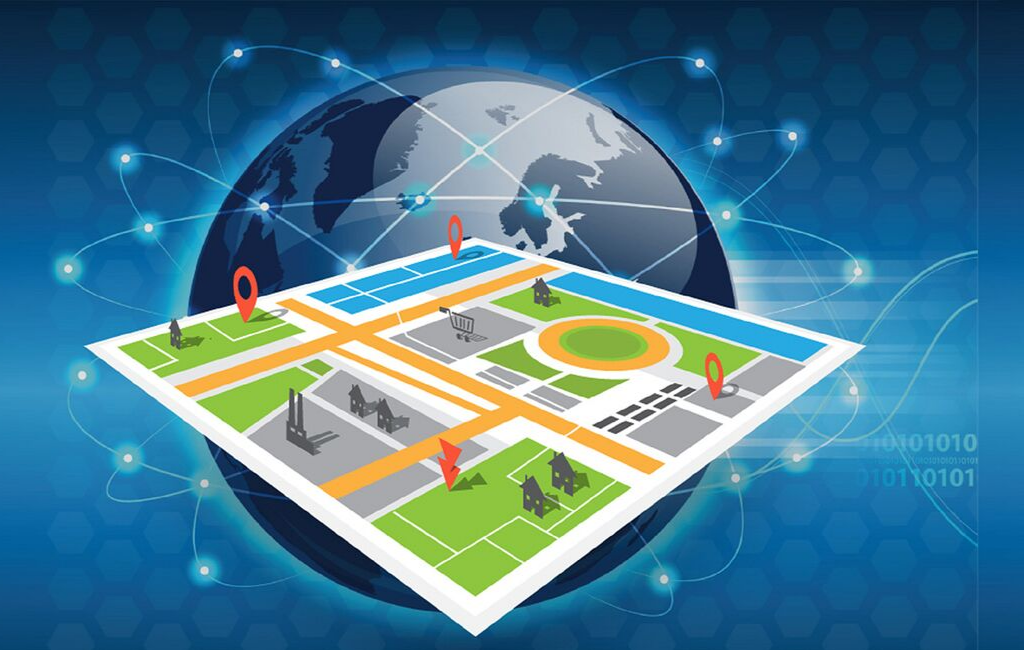
A modern Geospatial Market Platform is increasingly defined by its ability to unify diverse spatial datasets and deliver analytics at scale. Platforms combine GIS tools, data management, visualization, and APIs that allow organizations to build location-aware applications. They ingest data from satellites, drones, LiDAR, mobile devices, and IoT sensors, then align it to common coordinate systems and metadata standards. Cloud-native platforms enable scalable processing for large imagery and point-cloud datasets, supporting change detection, classification, and 3D modeling. Platform capabilities often include geocoding, routing, spatial querying, and real-time dashboards. As digital twins become more common, platforms must support continuous updates, versioning, and collaboration across engineering, operations, and planning teams. Interoperability with enterprise systems—asset management, ERP, CRM—ensures spatial insights translate into actions such as work orders, inspections, or investment planning. This makes platform selection a strategic decision rather than a tooling choice.
3D and real-time features are major platform differentiators. LiDAR and photogrammetry enable precise terrain and building models for construction, flood modeling, and urban planning. Real-time location feeds support fleet tracking, geofencing, and situational awareness during incidents. Platforms increasingly support time-series spatial analytics, allowing users to analyze movement patterns and changes over time. AI services embedded in platforms automate mapping tasks, extracting features such as roads, vegetation, rooftops, or pipeline corridors from imagery. These automation capabilities reduce manual GIS labor and accelerate update cycles. Data governance features are also essential: platforms provide catalogs, lineage tracking, role-based access, and audit logs. Security is particularly important for critical infrastructure and defense use cases. Privacy controls matter when using consumer location data, requiring anonymization and aggregation. Platforms that balance powerful analytics with strong governance are better positioned for enterprise adoption, where compliance and trust are necessary for operational decision-making.
Platform ecosystems are expanding through APIs, marketplaces, and partner integrations. Developers embed maps and geospatial analytics into operational applications for utilities, telecoms, and logistics. Integration with BI tools and data warehouses enables spatial analytics to appear in enterprise reporting. Convergence with BIM and CAD supports infrastructure lifecycle management, connecting design models with real-world geography. Platforms also offer mobile field applications for inspections and data capture, improving the accuracy of asset inventories. Many organizations use platforms to publish internal or public web maps, supporting transparency and collaboration. Performance and cost management are important considerations; processing high-resolution imagery and LiDAR can be expensive, so platforms that optimize storage and compute usage are attractive. Managed services and automated pipelines reduce operational overhead, especially for organizations that cannot maintain specialized geospatial teams. As organizations scale, platform standardization helps avoid fragmented tools and inconsistent datasets across departments.
The platform future will be shaped by digital twins, AI automation, and broader democratization of spatial analytics. More users will access geospatial insights through dashboards and embedded tools rather than dedicated GIS software. Platforms will enhance low-code capabilities, enabling faster application building by non-developers. AI will improve feature extraction, change detection, and predictive modeling, reducing time to insight. Real-time data fusion will become standard for operational monitoring, integrating sensor feeds with imagery and asset models. Buyers evaluating platforms should prioritize interoperability, governance, scalability, and the availability of high-quality data layers. They should also consider skills and adoption: platforms with intuitive interfaces and strong training resources drive broader usage. Ultimately, geospatial platforms will function as enterprise spatial operating systems—managing location data, powering analytics, and enabling decisions across climate resilience, infrastructure operations, and commercial optimization. Successful platforms will be those that convert complex spatial data into trusted, actionable intelligence.
Top Trending Reports:

 English
 Arabic
 French
 Spanish
 Portuguese
 Deutsch
 Turkish
 Dutch
Dutch
 Russian
 Romaian
 Portuguese (Brazil)
 Greek
Greek