


What Materials Go Into a Quality Blood Collection Tube Mould?
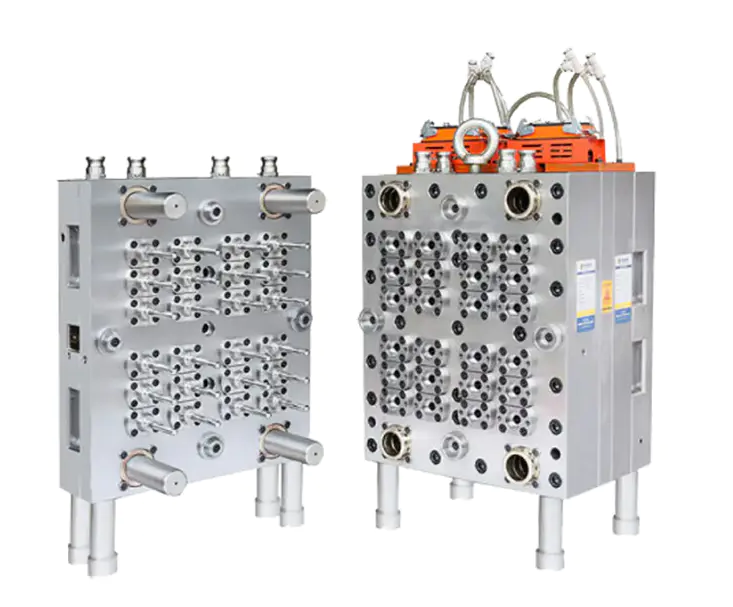
A blood collection tube mould produces the cylindrical plastic bodies that hold blood samples during collection, transport, and centrifugation. These tubes must meet exacting dimensional specifications: consistent internal diameter for correct additive volume ratios, uniform wall thickness for centrifuge balance, and precise length tolerances that ensure compatibility with automated laboratory analyzers. Any dimensional variation originating in the blood collection tube mould translates into tubes that fail quality checks, perform unpredictably in centrifuges, or jam in high-throughput laboratory automation equipment.
PET and PVC resins dominate blood collection tube production, each presenting different processing characteristics inside the blood collection tube mould. PET offers clarity, chemical resistance, and rigidity that suits vacuum tube applications particularly well. PVC formulations provide flexibility and compatibility with specific additive chemistries. Both materials require precise melt temperature control, injection pressure management, and cooling rate optimization within the blood collection tube mould to produce tubes free from sink marks, warpage, or internal stress that could compromise tube integrity during vacuum sealing or centrifugation.
Cavity count decisions for blood collection tube mould projects balance capital investment against production volume requirements. High-volume manufacturers running continuous production lines justify investment in multi-cavity blood collection tube mould tooling that produces dozens of tubes per cycle. Smaller specialty producers may operate lower-cavity configurations that offer faster tooling changeover and easier quality management across a broader product range. Either approach demands the same fundamental commitment to cavity-to-cavity dimensional consistency that medical device manufacturing standards require.
Steel specification for blood collection tube mould construction reflects the sterile, chemically active environment these tools serve. Cavity surfaces contact molten plastic that may contain additives, colorants, and processing agents that accelerate corrosion in inadequately protected tooling steel. Stainless steel cavity inserts or hard chrome surface treatments protect blood collection tube mould cavity surfaces from chemical attack while maintaining the smooth finish necessary for clean tube demoulding without surface defects.

 Arabic
 French
 Spanish
 Portuguese
 Deutsch
 Turkish
 Dutch
Dutch
 Italiano
 Russian
 Romaian
 Portuguese (Brazil)
 Greek
Greek